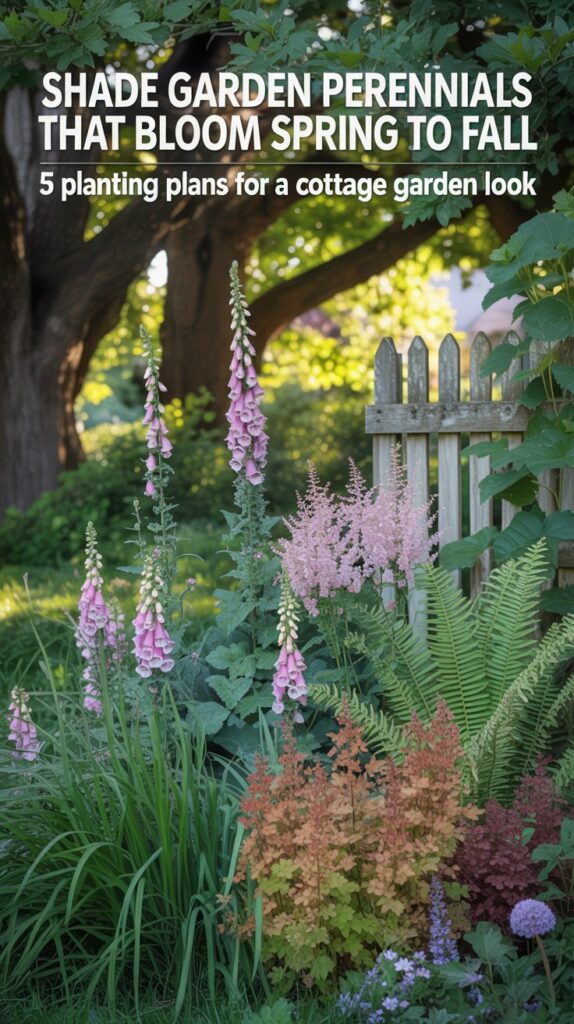
Shade Loving Perennials for a Cottage Garden (+ 5 Planting Plans That Bloom Spring Through Fall)
Here’s something I don’t talk about enough — the fenced backyard has been a bit of a missed opportunity for a long time. We have several large oak trees back there, so it’s mostly shade, and without a real plan I just never did much with it. A hosta here, a fern there. Nothing intentional.
The sunny areas of our property? Those belong to the deer. Unfenced and apparently an all-you-can-eat buffet. So the shady backyard — protected by the fence — is actually where the real gardening magic can happen. I just needed a plan. This year, I finally have one. I’m sharing some ideas for your shade garden so you can have a plan also. We can do this!
Here’s what I’ve learned: shade doesn’t mean boring. A cottage-style shade garden can be just as lush, romantic, and bloom-filled as anything in full sun — you just have to know which plants to work with.
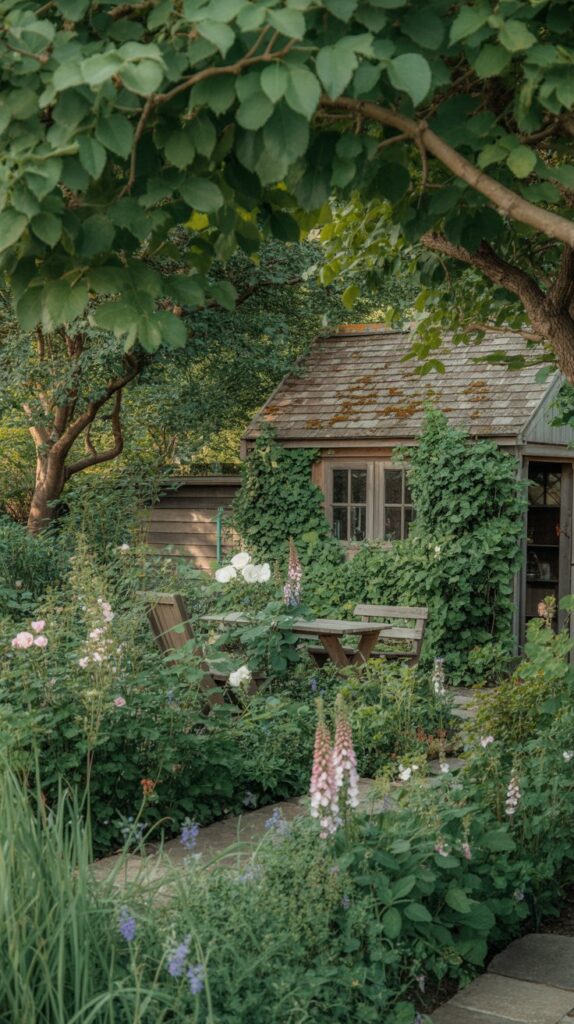
So if you’ve got a shady corner, a spot under a big tree, or a north-facing bed that never quite gets enough light, this post is for you. I’m sharing my favorite shade-loving perennials for a cottage garden look, plus five actual planting plans you can use as a starting point for your own beds.
First, Let’s Talk About What “Shade” Actually Means
Before we dig in (pun intended), it helps to know what kind of shade you’re dealing with, because not all shade is created equal.
Full shade is an area that gets fewer than 3 hours of direct sun a day — think under a dense tree canopy or on the north side of your house.
Part shade gets 3 to 6 hours of sun, usually in the morning or late afternoon. This is actually the sweet spot for a lot of cottage garden perennials.
Dappled shade is that lovely filtered light you get under trees with open canopies — exactly the kind of shade you might get under newly planted fruit trees. Perfect for so many plants.
Most of the plants I’m going to recommend do beautifully in part shade to dappled shade. A few will handle full shade like champs.
My Favorite Shade-Loving Perennials for a Cottage Garden Look
These are the plants I keep coming back to — the ones that give you that loose, layered, English cottage garden feel without needing a ton of sun.
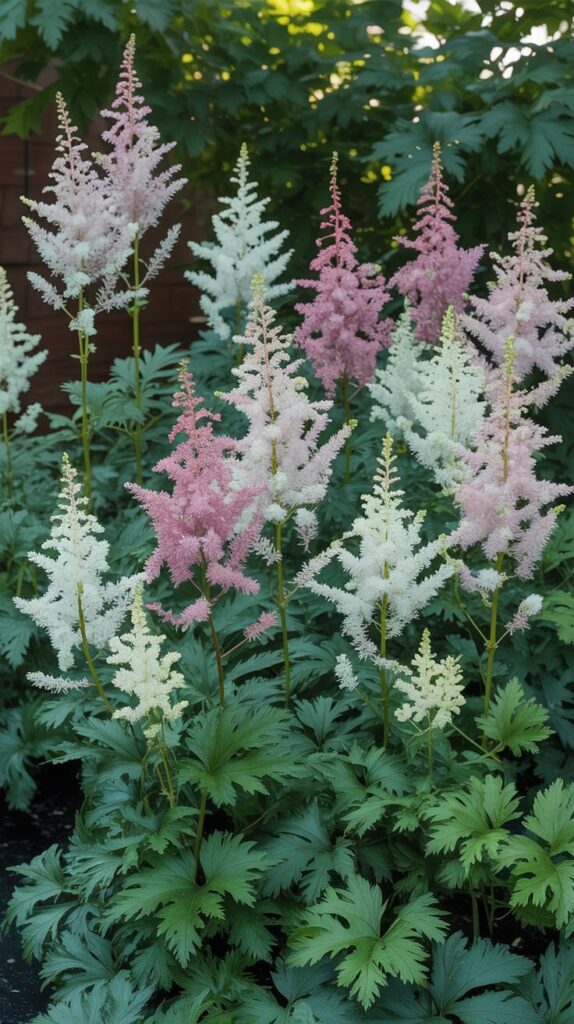
Astilbe — This one is practically made for the shady cottage garden. Feathery plumes in shades of pink, red, white, and lavender bloom in early to midsummer, and even the foliage is pretty. It loves moisture and looks stunning planted in groups. Zones 3–8.
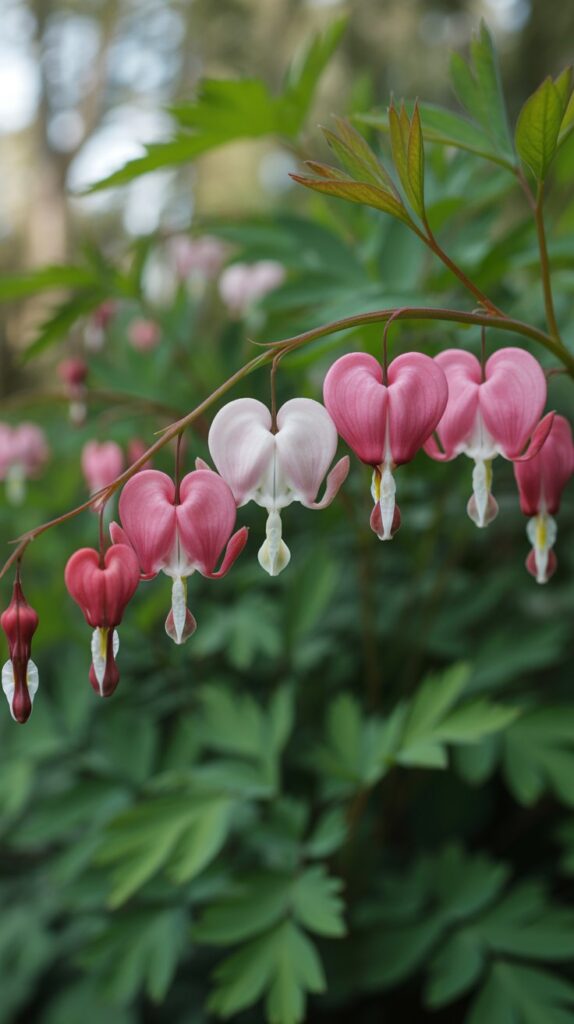
Bleeding Heart (Dicentra) — The old-fashioned bleeding heart is one of spring’s most charming blooms. Those little heart-shaped flowers dangling from arching stems are just so romantic. It blooms in spring and then goes dormant in summer heat, so you’ll want something to fill in behind it. We have one in our backyard that has grown to be very large over the years. The reliable blooms are such a welcome site in the spring! Zones 3–9.
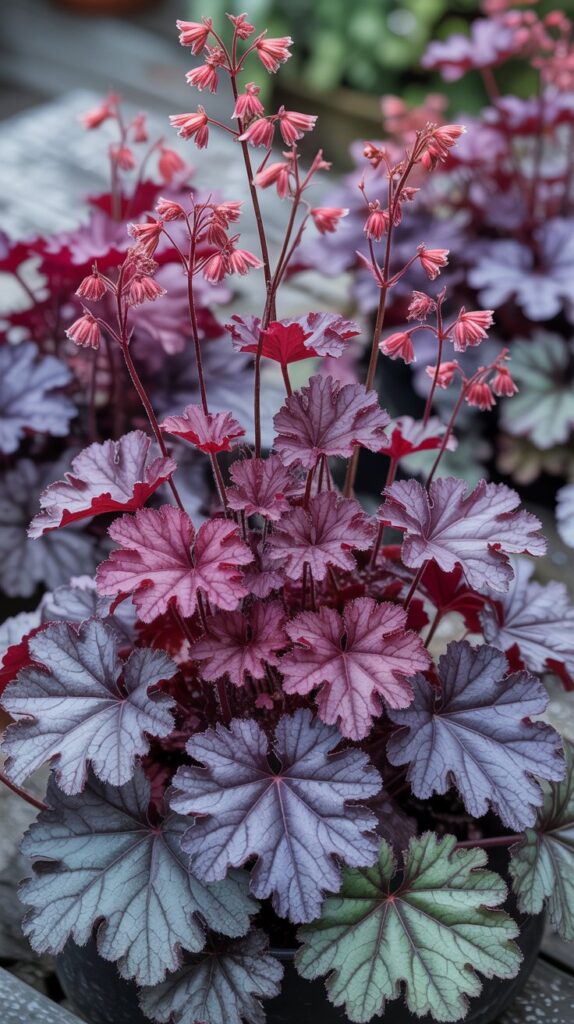
Coral Bells (Heuchera) — Grown mostly for their stunning foliage — burgundy, caramel, lime green, deep purple — coral bells also send up delicate flower stalks in late spring and early summer. They’re workhorses in a shade bed and give you color even when nothing is blooming. Zones 4–9.
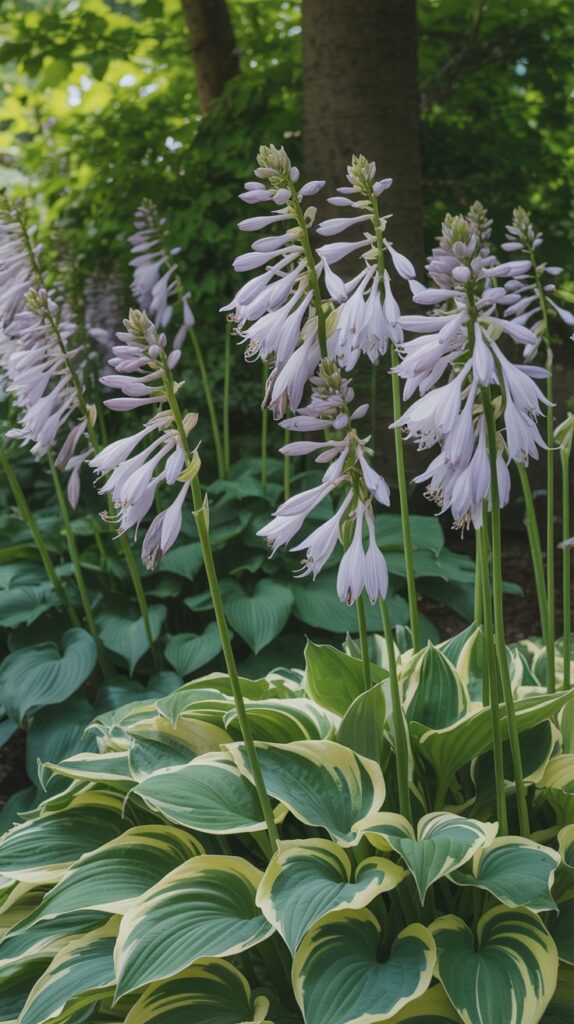
Hostas — I know, I know. Everyone does hostas. But honestly? There’s a reason. They’re beautiful, they come in an incredible range of sizes and colors, and they’re nearly indestructible. Use them as anchors in a shade planting and let the showier plants dance around them. Zones 3–9.
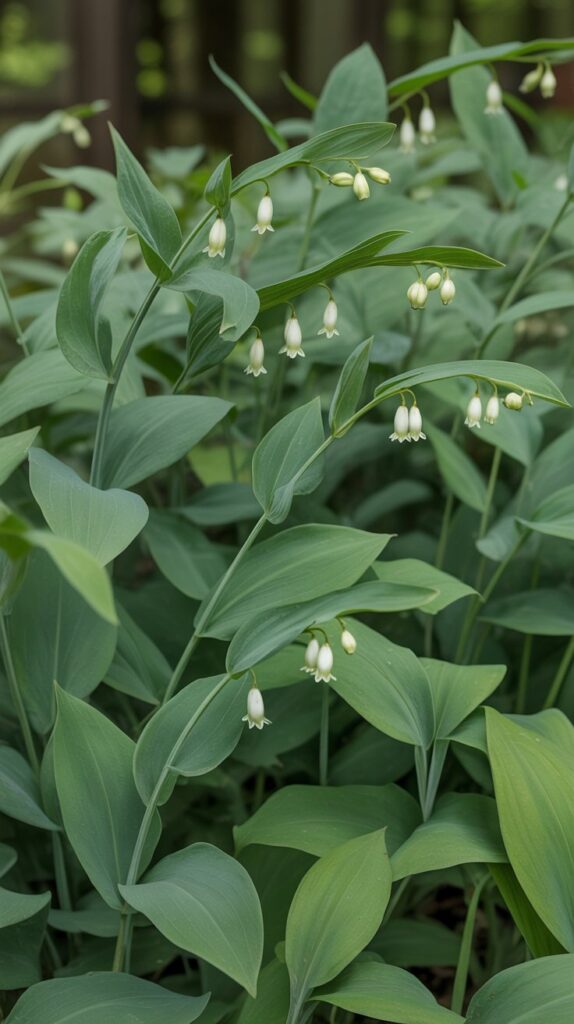
Solomon’s Seal (Polygonatum) — This one doesn’t get nearly enough attention. Arching stems with pairs of leaves and little white bell flowers in spring — it’s elegant and a bit wild, exactly the right vibe for a cottage garden. It spreads slowly over time and fills in beautifully. Zones 3–9.
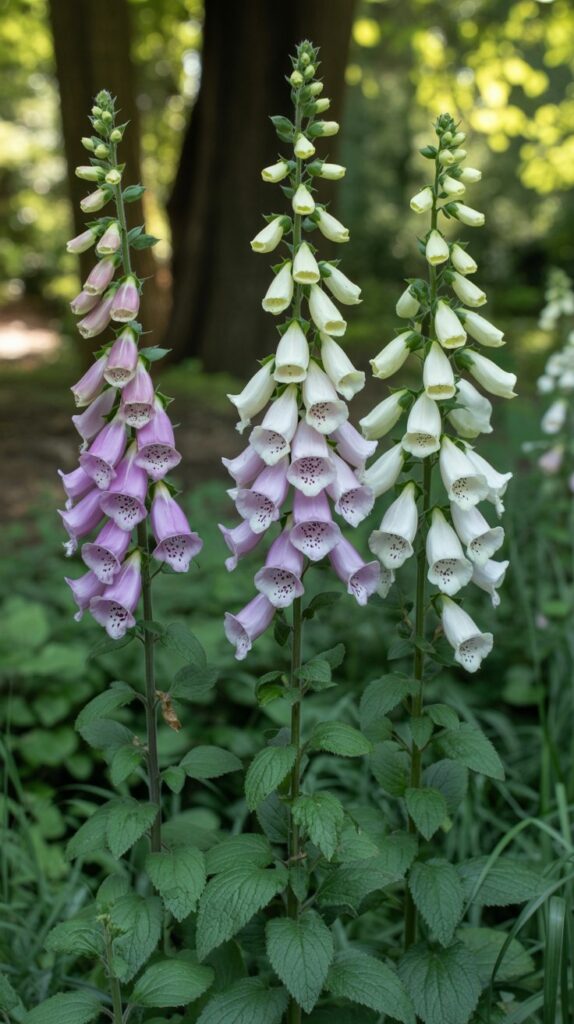
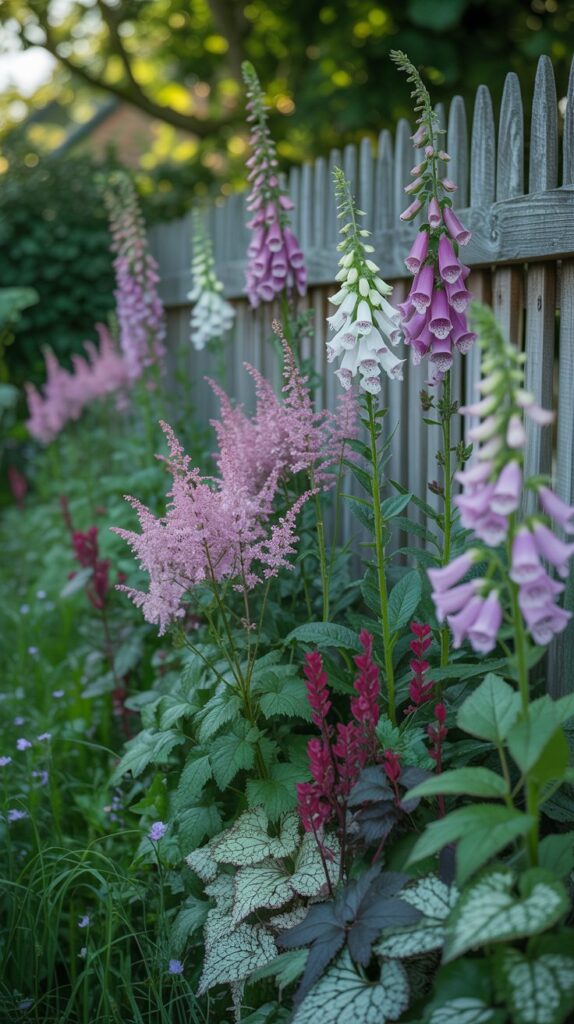
Foxglove (Digitalis) — Tall, dramatic spires covered in tubular blooms in purple, pink, cream, and white. Foxglove is technically a biennial in many zones, but it self-seeds so reliably it acts like a perennial. Plant it once and it’ll come back year after year. It lights up a shady border like nothing else. Zones 4–10 depending on variety.
Lungwort (Pulmonaria) — One of the first bloomers in spring, lungwort puts out clusters of pink and blue flowers (sometimes both on the same plant!) and has the most interesting spotted silvery foliage. It looks great long after it’s done blooming. Zones 3–8.

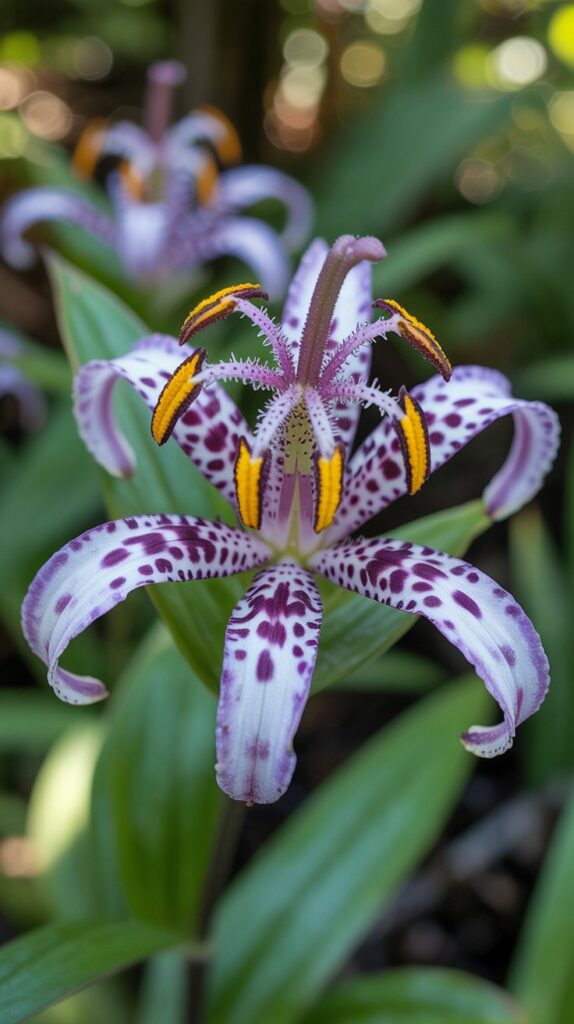
Toad Lily (Tricyrtis) — This is your secret weapon for fall color in the shade garden. Orchid-like spotted blooms in late summer through fall — they look exotic but they’re completely hardy and low maintenance. Zones 4–9.
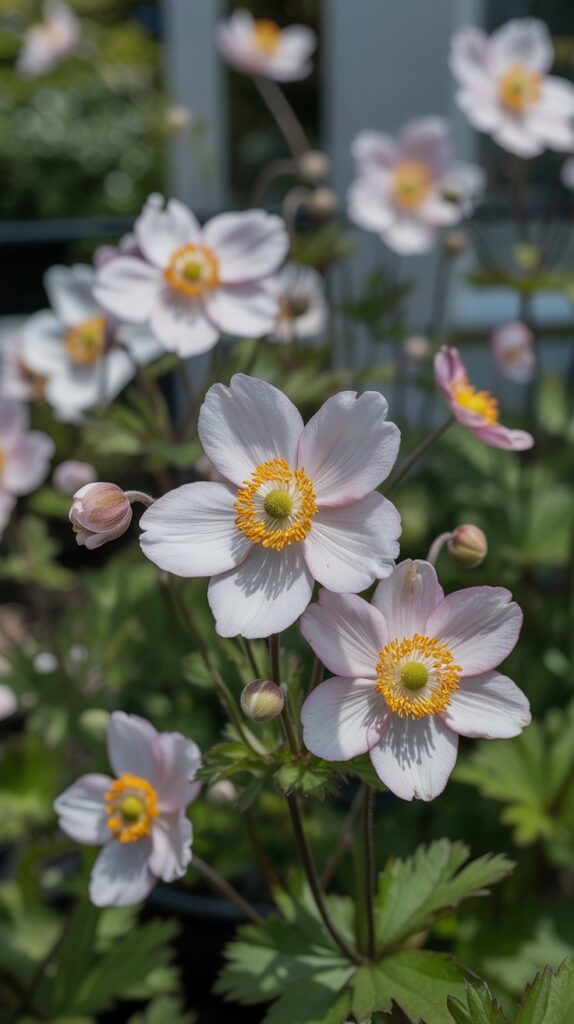
Japanese Anemone — Another fall bloomer, Japanese anemone sends up tall, swaying stems topped with simple, cup-shaped flowers in pink or white. They bloom from late summer into October and add a real sense of movement to the border. Zones 4–8.
Ferns — No cottage shade garden is complete without ferns. Ostrich ferns, autumn ferns, lady ferns — they bring texture and that lush, woodsy feel that makes everything else look better. Most are zones 3–8.

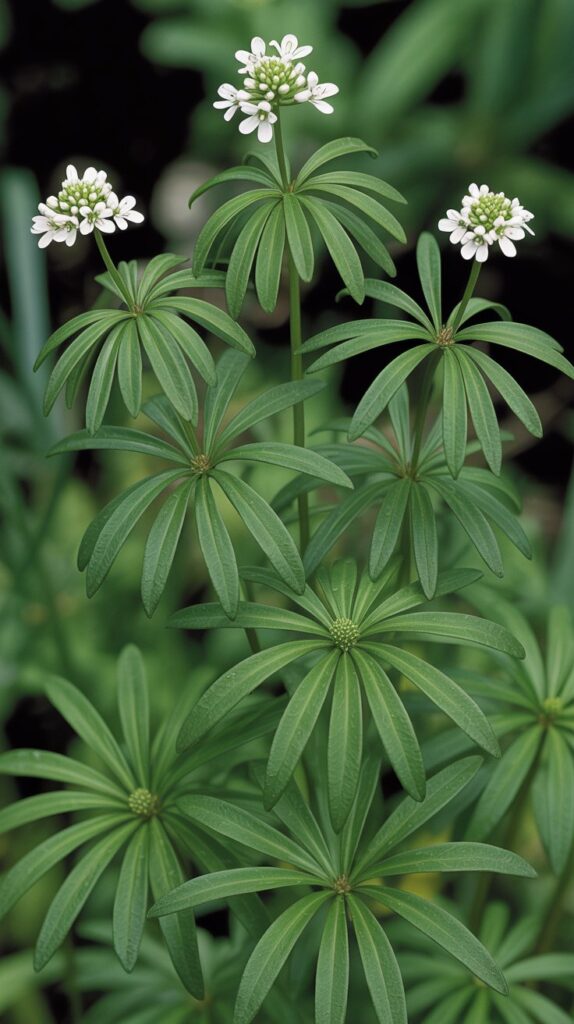
Sweet Woodruff (Galium odoratum) — A low-growing groundcover with tiny white flowers in spring and fresh green foliage that smells like vanilla when you brush against it. Wonderful as an edging plant or to fill in around taller plants. Zones 4–8.
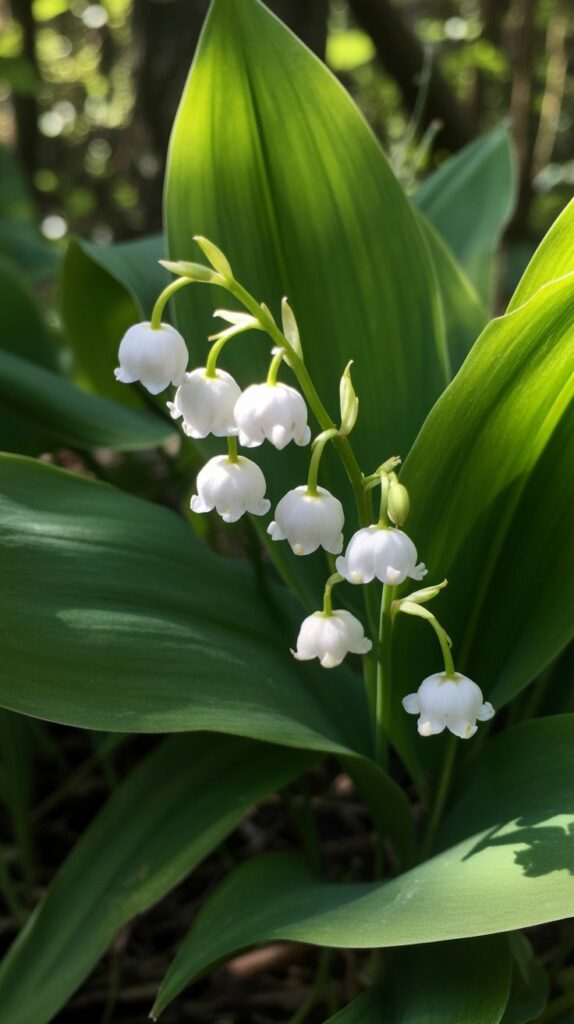
Lily of the Valley (Convallaria) — Sweetly fragrant little white bells on a carpet of broad green leaves in late spring. It spreads readily and can be invasive in some areas, so give it a spot where it has room to roam — or plant it in a contained bed. Zones 2–9.
5 Cottage Garden Planting Plans for Shady Spots
These planting plans are meant to give you a starting framework — not a rigid prescription. Think of them like a recipe you can adjust to your taste and your zone. Each one is designed to give you flowers from spring all the way through fall.
I’ve included approximate heights to help you layer from tall in the back to shorter in the front, which is classic cottage garden style.
Planting Plan 1: The Romantic Spring-to-Fall Shade Border
Best for: Part shade, a long rectangular bed along a fence or wall Bed size: approximately 4 feet deep x 12 feet wide
This is a classic layered cottage border with a long season of bloom. It starts with early spring color and carries through until frost.
Back row (tallest):
- 3 Foxglove (4–6 ft) — blooms late spring/early summer
- 2 Japanese Anemone (3–4 ft) — blooms late summer/fall
Middle row:
- 3 Astilbe in pink or white (2–3 ft) — blooms midsummer
- 2 Bleeding Heart (2–3 ft) — blooms spring
- 1 large Hosta ‘Sum and Substance’ or similar (2–3 ft) — foliage anchor all season
Front row (shortest):
- 3 Coral Bells in a deep burgundy (12–18 in) — foliage interest all season
- 3 Lungwort (12 in) — early spring blooms, spotted foliage
- 5 Sweet Woodruff as edging (6–8 in) — spring blooms, fragrant foliage
Bloom succession: Lungwort → Bleeding Heart → Foxglove → Astilbe → Japanese Anemone
Planting Plan 2: The Dappled Shade Woodland Cottage Garden
Best for: Under fruit trees or open-canopy trees, naturalistic style Bed size: approximately 6 feet deep x 10 feet wide, irregular shape
This one is designed to look like it just happened naturally — a little wild, a little magical. Perfect for the kind of light you get under newly planted fruit trees (which is exactly what I’m working with this year!).
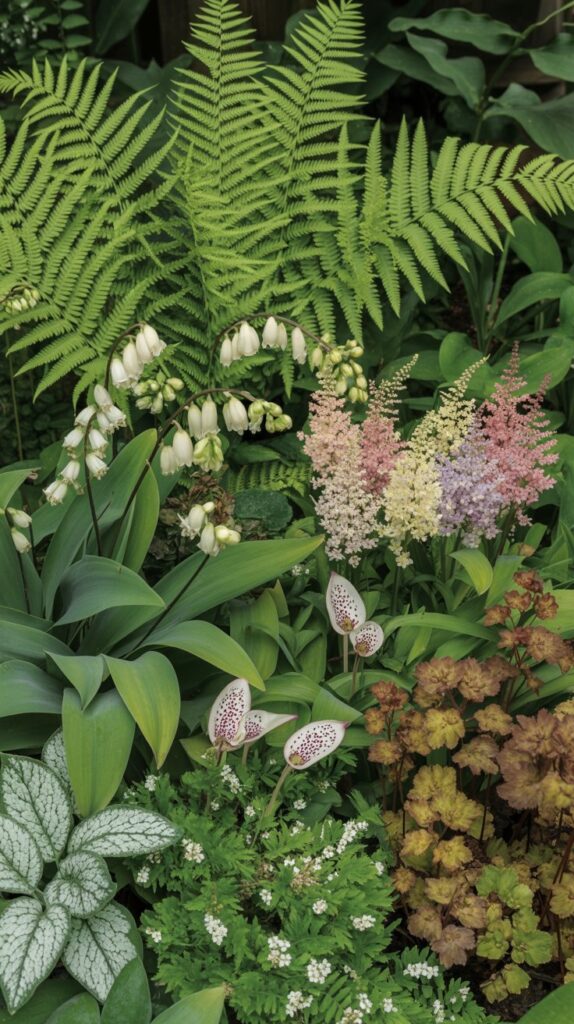
Tall layer:
- 3 Solomon’s Seal (2–3 ft) — spring blooms, graceful arching habit
- 2 Ostrich Fern (3–4 ft) — gorgeous texture, lush all season
Mid layer:
- 3 Astilbe in mixed colors (2–3 ft) — midsummer bloom
- 2 Toad Lily (2–3 ft) — late summer/fall
- 3 Coral Bells in caramel or lime (12–18 in) — foliage contrast
Ground layer:
- Carpet of Sweet Woodruff woven throughout
- 5 Lungwort scattered at edges (12 in)
The look: Soft, layered, effortlessly romantic. The kind of garden that looks like it’s been there for years on day one.
Bloom succession: Lungwort → Sweet Woodruff → Solomon’s Seal → Astilbe → Toad Lily
Planting Plan 3: The Deep Shade Cottage Corner
Best for: Full to deep shade — north side of house, under a dense tree Bed size: approximately 5 feet x 8 feet
This one works where almost nothing else will, and it still looks absolutely lovely.
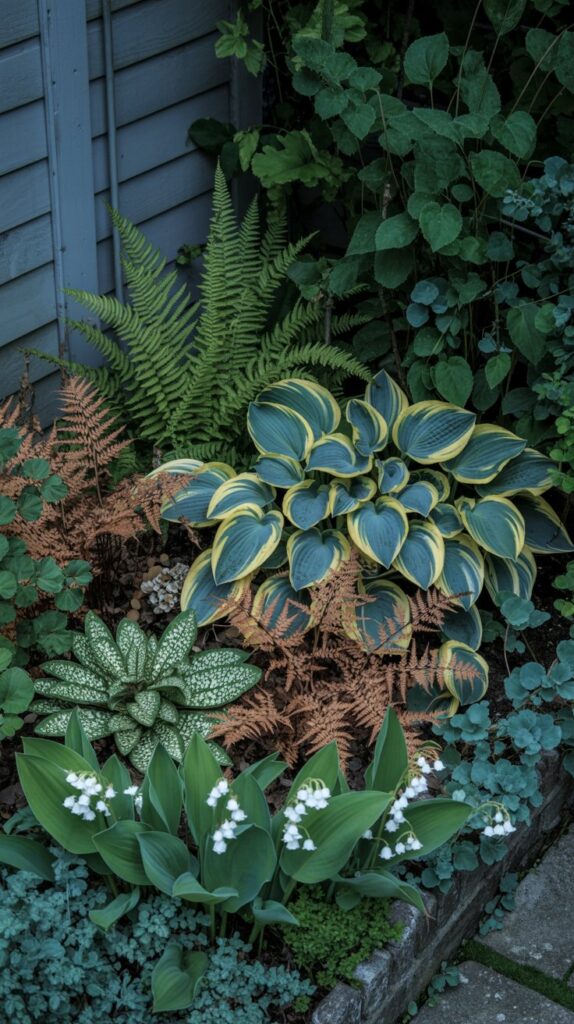
Back:
- 2 large Hostas in contrasting colors — one blue-green, one gold (2–3 ft)
- 1 Autumn Fern (18–24 in)
Middle:
- 3 Coral Bells (foliage carries the color here) (12–18 in)
- 2 Bleeding Heart (2–3 ft) — spring blooms, then ferns and hostas fill in
Front/edges:
- Lily of the Valley allowed to naturalize along the front edge
- 3 Lungwort (12 in)
Note: In true deep shade, you’re leaning more on foliage than flowers — and that’s okay. The layering of hosta textures, coral bells colors, and fern fronds creates a lush, beautiful bed even without big blooms.
Bloom succession: Lily of the Valley → Lungwort → Bleeding Heart (then foliage takes over beautifully)
Planting Plan 4: The Cottage Shade Garden for Small Spaces
Best for: Part shade, a smaller accent bed or side yard Bed size: approximately 3 feet deep x 6 feet wide
Don’t have a lot of space? This compact plan still gives you layers, color, and a long bloom season.
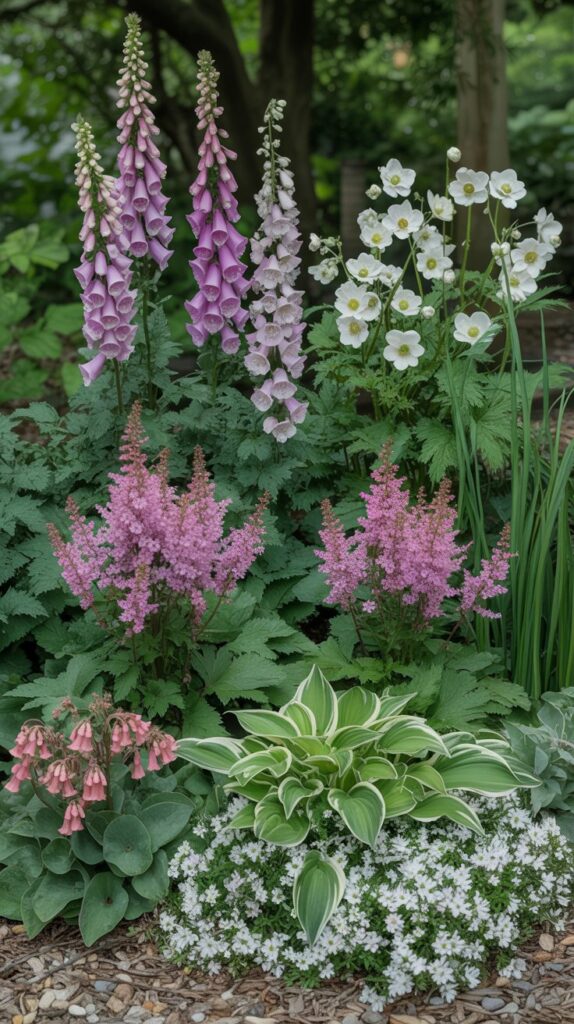
Back:
- 1 Foxglove (4–5 ft) — late spring drama
- 1 Japanese Anemone (3 ft) — fall bloomer
Middle:
- 2 Astilbe in pink (2 ft)
- 1 Hosta medium size (18 in)
Front:
- 2 Coral Bells (12 in)
- 3 Sweet Woodruff as edging
Why it works: You’ve got vertical interest from the foxglove, a mid-season anchor from the astilbe and hosta, fall color from the anemone, and foliage interest all season long from the coral bells — all in a tidy 18 square feet.
Bloom succession: Foxglove → Astilbe → Japanese Anemone
Planting Plan 5: The Fragrant Cottage Shade Garden
Best for: Part shade near a patio, path, or seating area where you’ll enjoy the scent Bed size: approximately 4 feet deep x 10 feet wide
This one is all about the sensory experience — blooms you can smell, textures you want to touch, and that lovely feeling of being surrounded by a secret garden.
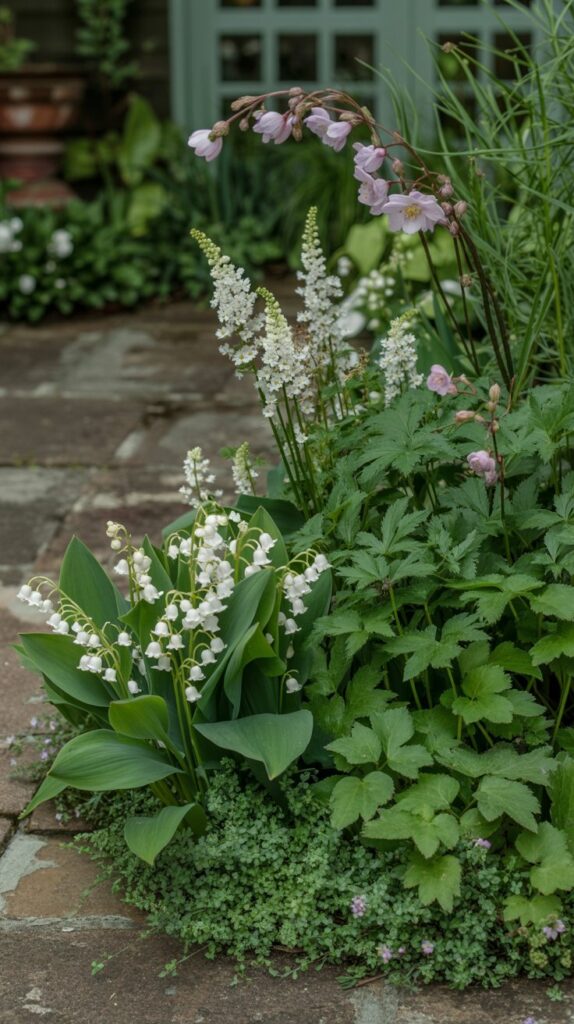
Back:
- 2 Foxglove (4–5 ft)
- 2 Japanese Anemone (3–4 ft)
Middle:
- 3 Astilbe in white (2–3 ft) — lightly fragrant
- 2 Solomon’s Seal (2–3 ft)
- 2 Coral Bells for foliage contrast
Front:
- Lily of the Valley along the entire front edge — heavenly spring fragrance
- Sweet Woodruff woven in — vanilla scent when brushed
- 3 Lungwort (12 in) — early color
The experience: In spring this bed is absolutely magical — the scent of lily of the valley alone is worth it. Then it transitions through summer with the astilbe and Solomon’s seal, and finishes with the airy Japanese anemone blooms in fall.
Bloom succession: Lily of the Valley + Lungwort → Solomon’s Seal → Astilbe → Japanese Anemone
A Few Tips Before You Start Planting
Amend your soil. Shade gardens often have dry, root-filled soil, especially under trees. Add plenty of compost before planting and refresh it with a layer of mulch every year.
Don’t fight the dry shade. If you’ve got very dry shade (like under a big maple), focus on plants like coral bells, Solomon’s seal, and ferns rather than astilbe, which wants moisture.
Plant in odd numbers. Groups of 3 or 5 almost always look better than pairs. It gives that relaxed, cottage-y feel instead of looking too stiff and formal.
Let things spread. Cottage gardens are meant to look abundant and a little unruly. Let your sweet woodruff wander, let your bleeding heart self-seed, let the lily of the valley naturalize. That’s the whole point.
Think about foliage as much as flowers. In shade especially, the flowers are just the bonus — the real structure comes from beautiful foliage. Hostas, coral bells, ferns, and Solomon’s seal all earn their place even when they’re not in bloom.
My Plans for This Year
This year I’m finally treating our shady spots with the same intention I give the sunny beds. With fruit trees going in, I know we’ll have more dappled shade to work with over time, and I want those beds ready. I’m starting with Planting Plan 2 under the trees and Plan 1 along the shady fence line on the north side of the property.
I’ll be documenting it all as it comes together — the before, the planting days, and eventually (fingers crossed) the blooms. There is something so hopeful about planting perennials. You put them in knowing they’ll come back bigger and better every year, and that feels like exactly the right kind of investment right now.
If you try any of these planting plans or have a favorite shade perennial I didn’t mention, drop it in the comments — I’d love to hear what’s working in your garden!
Happy planting, friend. 🌿
Pin this post so you can reference these planting plans when you’re ready to dig in!